 Reviews



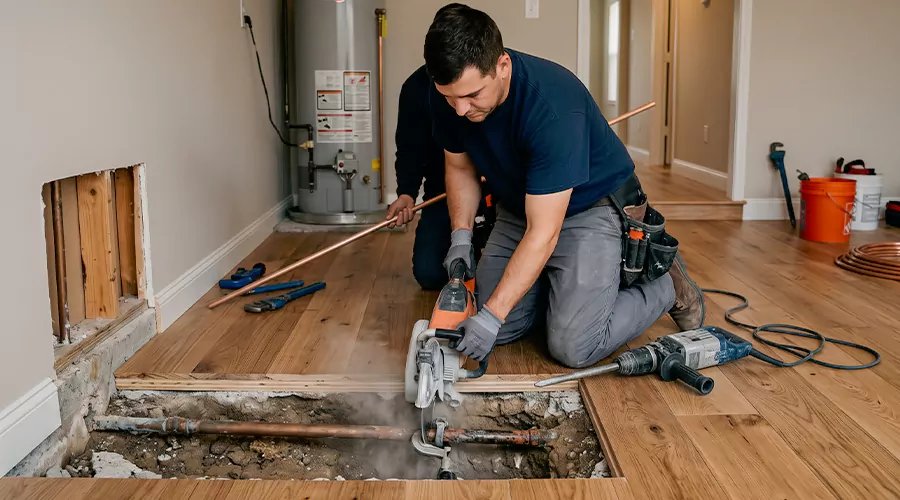
Slab leak repair costs an average of about $2,280 in the United States in 2026. Most projects fall between $630 and $4,400, including leak detection, although difficult access or substantial water damage can raise the total.
A slab leak occurs when plumbing beneath or within a concrete foundation leaks. The repair bill depends on more than the broken pipe. Detection and access can affect the total, while restoring flooring or concrete may add separate costs. That is why two slab leaks with similar pipe damage can produce very different repair estimates.
What Is the Average Slab Leak Repair Cost in 2026?
The 2026 U.S. average is approximately $2,280, with most slab leak repairs costing 630–4,400. This reported range includes leak detection. Location and accessibility are major price factors because a leak beneath finished flooring can require more demolition and restoration than one under an unfinished area.
The following table shows the main published cost ranges.
| Slab Leak Expense | 2026 U.S. Cost |
|---|---|
| Typical slab leak project | 630–4,400 |
| National average | $2,280 |
| Leak detection | 150–400 |
| Leak detection average | $280 |
| Pinhole pipe repair | 150–800 |
| Slab leak reroute | 600–4,000 |
| Drain line repair under slab | 800–5,000 |
| Concrete slab repair after access | 300–6,750 |
These figures represent different components and repair approaches. They should not simply be added together because some project totals already include overlapping work.
What Does Slab Leak Detection Cost?
Professional slab leak detection typically costs 150–400 in 2026, with an average of about $280. Detection is performed before unnecessary demolition because the objective is to narrow the leak location as closely as practical.
Possible detection methods include:
- Acoustic listening.
- Thermal imaging.
- Moisture measurement.
- Pressure testing.
- Meter-based water-use testing.
- Pipe tracing.
No single instrument identifies every leak:
For example, thermal imaging does not see through concrete. It detects temperature differences at accessible surfaces that may suggest moisture or a hot-water leak. FLIR recommends confirming suspected moisture patterns with a moisture meter because other conditions can produce similar thermal patterns.
What Factors Affect Slab Leak Repair Cost?
Accessibility and repair method are among the largest cost factors. A pipe beneath an unfinished utility area may be easier to reach than one beneath hardwood flooring or permanent cabinets. Water damage and necessary build-back can create additional expenses.
Major pricing factors include:
- Leak location: Difficult-to-reach areas require more labor.
- Pipe condition: One localized defect differs from several deteriorating sections.
- Repair method: Direct access and rerouting involve different work.
- Flooring: Tile or hardwood may need removal and restoration.
- Concrete access: Cutting the slab can add demolition work.
- Water damage: Wet subfloor or drywall may require restoration.
- Permits: Local requirements can add fees.
- Emergency work: Immediate service can increase labor costs.
Angi reports that leak accessibility is one of the strongest drivers of the total project price.
How Much Does Direct Slab Access Cost?
Direct access involves opening the concrete near the suspected leak so the damaged pipe can be repaired or replaced. This approach may make sense for a localized failure when the leak can be identified accurately. Flooring and slab restoration contribute to the total. HomeGuide reports 700–5,000 for projects involving digging into the foundation and replacing damaged piping. The same source reports excavation or concrete access work of approximately 500–3,000 in suitable projects. The final amount depends on what sits above the leak. Opening unfinished concrete in a utility room creates a different restoration job from cutting beneath kitchen cabinetry.
How Much Does Pipe Rerouting Cost?
Rerouting abandons the leaking underground section and creates a new plumbing route through another part of the building. This can avoid repeatedly opening the slab when the buried piping has broader deterioration. Published costs vary because rerouting scope varies widely. Angi reports slab leak rerouting costs of approximately 600–4,000 for certain projects. HomeGuide reports a broader 3,900–7,500 range for more extensive rerouting work. These figures describe different project scopes. A short reroute around one damaged section is not equivalent to relocating substantial portions of a plumbing system.
What Does Pipe Lining Cost?
Pipe lining can rehabilitate certain suitable pipes without opening the entire slab, but it is not appropriate for every plumbing material or pressure system. The existing pipe must be evaluated before deciding whether lining is compatible with its condition and intended use. HomeGuide reports pipe-lining costs of approximately 500–3,500 for slab leak projects. Cured-in-place lining can cost around 90–250 per linear foot in its applicable uses. Do not assume that a lining method advertised for sewer piping is automatically appropriate for a potable-water supply line. The repair method must match the pipe and local plumbing requirements.
How Much Does Repairing the Concrete Cost?
Concrete restoration can become a separate cost after the pipe repair is complete. Angi reports approximately 300–6,750 for repairing the slab after access, depending on the size and number of openings.
Floor restoration can add more.
Examples include:
- Replacing removed tile.
- Repairing hardwood.
- Restoring subfloor.
- Reinstalling cabinets.
- Repairing drywall.
- Repainting damaged surfaces.
An estimate that covers only plumbing may not include all finished-surface restoration. Ask which build-back items are included before comparing quotes.
Can Water Damage Increase the Cost?
An undetected slab leak can damage flooring or interior finishes before the pipe is repaired. Prolonged moisture may also require drying and restoration work. This expense is separate from repairing the plumbing itself. Angi reports water-damage restoration ranging from hundreds of dollars for limited damage to $15,000 or more for extensive situations. This wide range is why early detection matters. A small pipe repair can become a much larger project when water remains hidden beneath finished materials for an extended period.
How Do You Know Whether You Have a Slab Leak Before Paying for Detection?
Several symptoms can justify further investigation, but no single household sign proves that a leak is beneath the slab. A rising water bill may come from a toilet or irrigation leak. A warm floor can have explanations unrelated to plumbing.
Useful warning signs include:
- The water meter moves while every known water use is off.
- The water bill rises without a clear explanation.
- Running water can be heard when fixtures are closed.
- A floor area becomes unexpectedly warm.
- Flooring develops unexplained moisture.
- Water pressure changes.
- Dampness appears without a visible source.
- A leak cannot be found in accessible plumbing.
EPA WaterSense recommends a two-hour meter test with no household water use. If the meter changes, a leak is likely somewhere in the property. This test detects unexplained consumption. It does not prove that the leak is under the slab.
How Long Does Slab Leak Repair Take?
A straightforward localized repair can sometimes be completed within several hours, while more involved projects may take one to three days or longer. The repair timeline expands when concrete access or rerouting is required. Floor restoration can continue after the plumbing is repaired. Angi notes that a minor accessible slab leak may take around three hours to access and repair. HomeGuide reports many projects taking one to three days depending on severity and method. Build-back work can extend the overall project timeline beyond the plumbing repair itself.
Does Homeowners Insurance Cover Slab Leak Repair?
Insurance coverage depends on the policy and the cause of the loss. Sudden covered water damage may be treated differently from gradual deterioration or ordinary pipe wear. The plumbing repair itself and resulting damage may also receive different coverage decisions. Angi notes that coverage commonly depends on whether the underlying event is covered under the policy. Wear or poor maintenance may be excluded. Review the actual policy and contact the insurer before assuming coverage. Document visible damage before major restoration begins when doing so is safe.
When Should You Call a Professional?
Slab leak repair requires professional diagnosis because the pipe is hidden beneath a structural concrete foundation. Accurate detection can reduce unnecessary demolition. The repair method also needs to account for pipe condition and the surrounding slab.
Professional diagnosis is appropriate when:
- The meter indicates unexplained water use.
- Water appears through flooring.
- A hot floor area accompanies water-loss symptoms.
- The leak cannot be found in exposed plumbing.
- Water pressure falls unexpectedly.
- Foundation access may be necessary.
- Rerouting is being considered.
The detection process may use several complementary methods before concrete is opened.
How Can You Control Slab Leak Repair Costs?
Early diagnosis and accurate leak location can limit unnecessary demolition and restoration. Comparing estimates is useful only when each contractor is proposing the same repair scope. One quote may cover pipe repair while another includes flooring or slab restoration.
Before approving the work:
- Ask whether leak detection is included.
- Confirm the proposed repair method.
- Ask what slab access is required.
- Identify who restores the concrete.
- Check whether flooring restoration is included.
- Ask about permit costs.
- Review warranty terms.
- Confirm whether rerouting is an alternative.
The cheapest plumbing repair can become more expensive when major build-back has been excluded from the estimate.
Conclusion
Slab leak repair cost averages about $2,280 in the United States in 2026, with most projects ranging from $630 to $4,400. Detection costs around 150–400. Accessibility and repair method can change the final price substantially. Separate plumbing repair from concrete and finish restoration when comparing quotes. If unexplained water use suggests a hidden leak, start with meter testing and accurate leak detection before opening the slab.
Frequently Asked Questions
How much does slab leak detection cost?
Most homeowners pay approximately 150–400 in 2026, with an average near $280.
Is rerouting cheaper than breaking the slab?
Sometimes. The answer depends on the leak location and how much new piping is required.
Does every slab leak require jackhammering?
No. Some situations can be addressed through rerouting or another suitable method.
Can a slab leak be repaired in one day?
Some localized accessible repairs can be completed quickly. Larger projects may take several days.
Is slab leak repair covered by insurance?
Coverage depends on the policy and the cause of the damage. Review the specific policy terms with the insurer.